
Élastiques pour lingerie : types, usages et comment choisir le bon
Si vous avez déjà essayé de coudre de la lingerie, vous savez une chose : les élastiques sont indispensables. Ils ne servent pas seulement à maintenir le vêtement en place — ils apportent maintien, confort et durabilité.
Vous pouvez utiliser la plus belle dentelle ou le tissu le plus luxueux, mais sans l’élastique adapté, un soutien-gorge ou une culotte ne s’ajustera jamais correctement.
Avec la grande variété d’élastiques pour lingerie disponibles, il est facile de s’y perdre. Lequel utiliser pour la bande sous poitrine ? Pour les bretelles ? Lequel est uniquement décoratif ? Voyons cela étape par étape et découvrons les types d’élastiques les plus courants, leur rôle et où les utiliser.
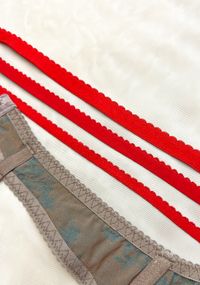
Élastique picot
L’élastique le plus reconnaissable, avec de petits picots le long du bord. Il est souvent utilisé pour finir les culottes et les bords de soutiens-gorge, mais peut également servir d’élastique sous poitrine.
Il est disponible en différentes largeurs — de 8 mm à 30 mm, les plus courantes étant 10–15 mm.
L’élastique picot allie esthétique et fonctionnalité : il paraît délicat tout en offrant un bon maintien.
👉 Découvrir les élastiques picot.
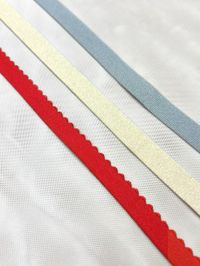
Élastique sous poitrine
Large, solide et stable — l’élastique sous poitrine maintient le soutien-gorge en place ou stabilise la taille dans certaines pièces de lingerie. C’est un élément essentiel pour le confort et l’ajustement.
Disponible en différentes largeurs — de 8 mm à 30 mm, les plus courantes étant 10–15 mm.
✔️ Utilisé pour les soutiens-gorge, porte-jarretelles et modèles inspirés des corsets
✔️ Plus l’élastique est large, meilleur est le maintien.
👉 Découvrir les élastiques pour lingerie.

Fold Over Elastic (FOE)
FOE is designed to fold in half and enclose raw fabric edges. The result? A smooth, neat, and flexible finish without bulk.
It can come in different widths — from 10 mm up to 50 mm. The most popular ones are 15–20 mm.
✔️ Perfect for panties, bralettes, and lingerie trims.
✔️ Keeps thin fabrics flat and polished.
👉 Discover my elastics by colour or fold over elastics.

Panty Elastic
Soft, lightweight, and delicate — panty elastic is used to finish the leg openings and waistlines of panties. It provides a gentle hold without digging into the skin, making lingerie comfortable for everyday wear.
These elastics can be flat, scalloped, or slightly textured, and are available in a wide range of widths and colors.
They’re ideal for creating a smooth, flexible finish on any type of panties — from everyday styles to the most delicate lace designs.
👉 Browse lingerie elastics.
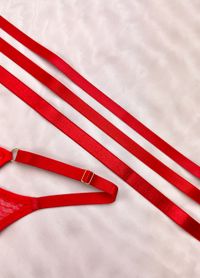
Bra Strap Elastic
Strong and supportive, yet comfortable enough for everyday wear. Strap elastic often has a shiny side and a matte reverse.
It can come in various widths — from 6 mm up to 25 mm. The most popular sizes are between 10 and 15 mm.
✔️ Used for bra straps, bralettes, and slips.
✔️ Can also be a design element — think decorative crossed straps on the back.
✔️ Available in different widths: narrow for delicate designs, wide for fuller support.
👉 Discover the elastics by colour or bra straps elastic.
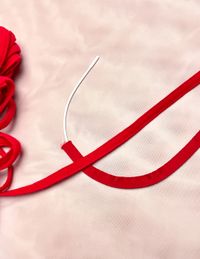
Channeling Elastic (wire casing)
A plush, firm elastic designed to encase underwires. It secures them in place while protecting the skin from discomfort.
✔️ Essential for underwire bras.
✔️ Soft on the inside, sturdy on the outside.
Channeling tapes come in single-seam, double-seam, and seamless types, differing in their construction method and number of seams. They also vary by material (for example, plush or satin) and by stiffness (elastic or non-elastic).
👉 Discover the elastics by colour or channeling.
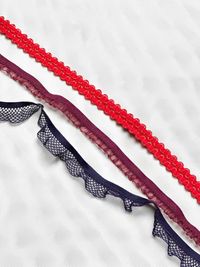
Decorative Elastic
When you want both function and beauty. With lace edges, metallic threads, or fancy patterns, decorative elastics elevate even the simplest lingerie design.
✔️ Perfect for bralettes, garter belts, suspenders, or accent details.
✔️ Adds a luxury, stylish finish.
👉 Browse lingerie elastics.
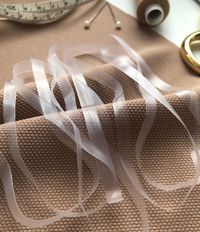
Silicone (Clear) Elastic
Almost invisible, yet incredibly useful. Clear elastic reinforces seams without changing the look of the garment.
✔️ Strengthens seams in stretch fabrics.
✔️ Commonly sewn into serged seams for lingerie sewing.
👉 Browse lingerie elastics.
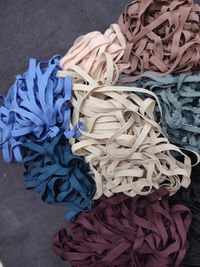
H-Elastic
A narrow, flat elastic used to stabilize lace edges. Thanks to H-elastic, scalloped lace maintains its beautiful shape even after many washes.
It can come in different widths — from 5 mm up to 8 mm.
✔️ Frequently used in lace bras and panties.
✔️ Keeps scalloped edges neat and secure.
👉 Browse lingerie elastics.
Handy Tips for Choosing Lingerie Elastics
Final Thoughts
Elastics may seem like small details, but they are the foundation of well-made lingerie. They determine comfort, fit, and durability while also offering creative design opportunities. Mastering different types of elastics will help you create lingerie that looks stunning and feels amazing.
👉 Browse our complete collection of lingerie elastics.
✨ Match elastic to fabric. Lightweight mesh needs soft, delicate elastics, while dense microfiber or satin requires firmer ones.
✨ Think design. A decorative elastic can be the star of your lingerie — on straps, waistbands, or garter belts.
✨ Keep a variety. Narrow elastics are perfect for panties; wider ones give stability to bras and waistbands.
✨ Support matters. The larger the garment size, the wider the elastic should be — especially in bras — for reliable support and comfort.
✨ A little sewing trick. Stretch the elastic slightly while sewing, and it will sit evenly without rippling.